



Stick
Company polo shirts with logo: fabric, fit and logo position
Which fabric, which fibre, which cut? How to find the right polo for your team – with models from our range, logo positions and care tips.
Piqué or jersey: which fabric suits you?
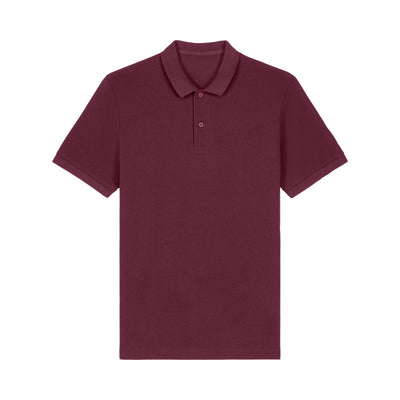
The classic polo shirt is made of piqué. Piqué is a textured knit with a fine waffle pattern. The small hollows let air through, and the fabric keeps its shape. Jersey is smooth and soft like a T-shirt and drapes more loosely. You’ll find both fabrics in our range. If you want polo shirts embroidered with your logo, the fabric is the first decision.
| Criterion | Textured knit Piqué | Smooth knit Jersey |
|---|---|---|
| Surface | Fine waffle pattern, with some grip | Smooth and soft |
| Look | Classic, smart, suitable for business | More casual, close to a T-shirt |
| Shape | Holds its shape even after long wear | Drapes more loosely |
| Embroidery | Carries a chest logo well | Works well, the fabric needs a firm backing |
| Example in the shop | Sol's Summer II, piqué, 170 g/m² | Sol's Prescott, jersey, 170 g/m² |
For service, reception and field staff, we usually recommend piqué. Jersey suits you if the polo should feel more like a casual shirt.
Cotton, blend or polyester?
Besides the knit, the fibre makes the difference. Cotton feels pleasant and absorbs moisture well. Blends with a polyester share are considered easier to care for. Pure polyester dries quickly and is common for sports polos. Here is how that looks across models from our range:
| Model | Material according to the manufacturer | Weight |
|---|---|---|
| Sol's Summer II | Piqué, combed ring-spun cotton | 170 g/m² |
| Stanley/Stella Coaster | Piqué, 100 % organic cotton | 185 g/m² |
| Hakro Classic 810 | Piqué, 100 % cotton, washable up to 60 °C | 200 g/m² |
| Sol's Prime | Piqué, 65 % polyester, 35 % cotton | 200 g/m² |
| Sol's Pitcher | Sports polo in recycled polyester, suitable for sublimation | 130 g/m² |
What the weight tells you
The figure in g/m² describes how heavy the fabric is. A lighter polo is airier, a heavier one feels firmer and more substantial. Both are suitable for embroidery; on very light fabrics we tend to keep the logo compact.
Women’s, men’s, unisex: the right fit
A polo only looks good if the cut fits. Many models come in a men’s and a women’s version, for example B&C My Polo 180 and My Polo 180 /Women, Hakro Classic 810 and Classic 110, or Stanley Coaster and Stella Coaster. The women’s models are cut for a female figure – the Hakro 110, for instance, has a narrower placket. There are also unisex polos such as Sol's Pulse and kids’ polos such as Sol's Kids’ Summer Polo II.
- Choose the same model for women and men so fabric and colour match.
- Ask your team for their sizes before you order instead of guessing.
- Check that the model covers every size your team needs.
- Plan a few extra pieces for new colleagues.
How to plan the roll-out across your team, from the size list to handing out the clothing, is shown in our checklist introducing company clothing.
Matching garments
Design them in the shop


Which polo for which job?
The quickest way to the right model is your team’s working day:
Your team wears the polo every day in service or in the shop.
Hard-wearing cotton piqué
The polos are washed often and hot.
Cotton, washable up to 60 °C
The polo should be easy-care and dry quickly.
Blend
Your team is out at sports events or company runs.
Polyester sports polo
The polo should look high-quality in the office or at trade fairs.
Heavy piqué
Often the best answer
Two models, one logo
A cotton polo for the office and a blended polo for outdoors – the same embroidery gives both the same brand look.
Piqué + blend
What about long sleeves?
Side noteFor cooler months, trade fairs or air-conditioned rooms there are polos with long sleeves, such as B&C My Polo 180 Long Sleeve, Sol's Perfect as a long-sleeve piqué at 180 g/m², or Tee Jays Luxury Stretch Long Sleeve in mini piqué with elastane and cuffs. That way your team wears the same look all year round. We place the chest logo in the same spot as on the short-sleeve version. What sets the Tee Jays and Nimbus brands apart for company clothing is covered in our guide to Tee Jays and Nimbus.
Where the logo sits best
A polo has less free space than a T-shirt, because the placket and collar take up room. These positions have proven themselves:
- Left chest
- The classic: clearly visible, calm and easy to read next to the placket
- Right chest
- For a name, a department or a second logo
- Sleeve
- For a small mark, a tagline or the web address
- Neck
- Discreetly below the collar, for example for a logo mark
- Back
- For large lettering – a print is often the better choice here
How we prepare your logo for the chest and why fine details need a certain size is explained in our post embroidering your logo step by step.
Embroidery or print on a polo?
On a polo, embroidery is the first choice. It looks high-quality, sits neatly on the piqué and lasts through many washes with proper care. The embroidery file is included, and up to three thread colours are covered.

From the workshop
Lettering you can feel
The photo shows a close-up of an embroidered lettering logo in red and white. The stitches lie tightly side by side and form smooth, shiny letters. That is why we usually recommend embroidery on polos: the logo becomes part of the fabric rather than just sitting on top.
A print pays off if your logo has a lot of colours, gradients or fine details, or if a large design should go on the back. For that we usually use DTF. Sports polos in polyester such as the Sol's Pitcher can also be printed by sublimation in light colours. You’ll find a detailed decision guide in our post embroidery or print for your company clothing.
How to keep your polo looking good
For the polo and logo to look good for a long time, washing is what counts. The permitted temperature is on the care label and varies from model to model.
Wash inside out
Protects the embroidery and the fabric surface
Wash with similar colours
Keeps your team’s colours consistent
Ironing directly over the embroidery
Better from the inside or with a cloth in between
Washing hotter than permitted
Can shrink the fabric and change its shape
You’ll find more tips in our washing instructions.
Polo shirts with logo: frequently asked questions
Which logo position is usual on a polo?
The left chest. The logo is clearly visible there and doesn’t clash with the placket. Sleeve, neck or back can be added as a second position.
Does every polo in one colour look the same?
Watch out for garment-dyed models. For the Stanley/Stella Coaster, the manufacturer notes that slight colour differences between pieces are possible. If an exactly matching shade matters to you, we advise you on the right model before you order.
Can I mix women’s and men’s polos in one order?
Yes. You choose sizes and cuts per model, and we embroider the same logo on every piece.
How long does it take for the polos to arrive?
After your print approval, we embroider in our own workshop in Munich. Delivery usually takes approx. 7–10 working days.
Looking for the right polo for your team? Get in touch – we’ll advise you free of charge on model, position and embroidery.

Team Shirtplus
Printing and embroidery in our own workshop in Munich. Created with AI support. Last updated: 12 Oct 2026.
Read next
All posts →
Printing and embroidering B&C: models and methods
Which B&C models suit print and which suit embroidery – with material and fabric weight from our product data, tips on methods and care, and the background to the PETA...19 Oct 2026
Logo positions: where your logo sits best on clothing
Where does your logo sit best? The main positions on shirts, polos, hoodies and jackets, common placement mistakes and how we align every position by laser.15 Oct 2026Tee Jays and Nimbus: two brands for embroidered company clothing
Polos, shirts, knitwear and jackets: what Tee Jays and Nimbus offer in our shop, what the models are suited to and what matters when embroidering their fabrics.11 Oct 2026Questions about your project?
We advise you on the layout free of charge and tell you which method suits your logo.