



Verfahren
Embroidery or print for company clothing? How to decide

Polo, shirt, T-shirt or jacket: when an embroidered logo is the better choice, when a print – and why combining both often works best for company clothing.
What embroidery and print say about you
Before we get into technique, ask yourself one simple question: how should your company clothing come across? Embroidery is made of thread. It sits slightly raised on the fabric, has a visible texture and catches the light differently depending on the angle. That looks high-quality and understated – much like a sewn-in brand label. For teams who deal with customers – in consulting, in a hotel or in the office – embroidery is therefore the natural choice.
A print sits flat on or in the fabric. It can be large, colourful and detailed, which makes it bolder and sportier. For trade fairs, company runs, events or merch, that is often exactly right. And on lightweight shirts a print adds hardly any weight.
One does not rule out the other. Even with a simple shirt you have a choice: if you go for T-shirts embroidered with your logo, a basic becomes something you can wear to a client meeting.
A rule of thumb from the workshop
Small and built to last: embroidery. Big, colourful or detailed: print. Everything in between is decided by your logo.
Embroidery and print side by side
The key differences at a glance. “Print” here covers both screen printing and transfer printing (DTF) – how those two differ is explained in our comparison screen printing or transfer printing.
| Criterion | Thread, slightly raised Embroidery | Ink, flat Print |
|---|---|---|
| Look | Premium, understated, like a brand label | Bold, sporty, eye-catching |
| Design size | Ideal for small logos on chest, sleeve or cap | Anything from small to a full back |
| Detail | Very fine lines and tiny lettering get lost | Fine lines, small lettering and photos come out cleanly |
| Colours | Thread colours, no gradients | Many colours and gradients possible, colour values matched closely |
| Garment | Sturdy fabrics: piqué, shirting, sweat fabric, jackets, caps | Thin shirts and performance fabrics too |
| Durability | Very hard-wearing, survives many washes | Lasts a long time with proper care |
Does your logo work as embroidery?
Embroidery is made up of individual stitches. Every thread has a thickness, and that is exactly what sets the limit: hairline strokes, very small lettering beneath the logo or a tiny strapline cannot be stitched cleanly. Gradients, shadows and photos do not exist in embroidery, because every area has one fixed thread colour.
That does not mean your logo will not work. Often a slightly simplified embroidery version is enough: the strapline is dropped, a thin outline becomes a little bolder, a gradient becomes a solid area. We create the embroidery file for you, and it is included. We embroider with up to three thread colours. Ideally, send us your logo as a vector file – what exactly we need is listed on the page supplying your logo.

From the workshop
One thread colour, strong contrast
The photo shows white embroidered lettering on dark grey fabric. It shows what makes embroidery what it is: the letters are built from densely laid stitches that reflect the light differently depending on the angle. Light thread on a dark background stays legible from a distance – as long as the letters do not get too fine.
With print, the logo question is simpler: in transfer printing, colours, gradients and fine details are no problem. In screen printing every colour needs its own screen, so it pays off for larger runs with few colours.
Matching garments
Design them in the shop


Which method suits which garment
Besides the logo, the garment decides. The firmer and more stable the fabric, the better it carries embroidery. The thinner and stretchier, the more likely a print fits. This is how we classify the typical items of company clothing:
| Garment | Usually | Why |
|---|---|---|
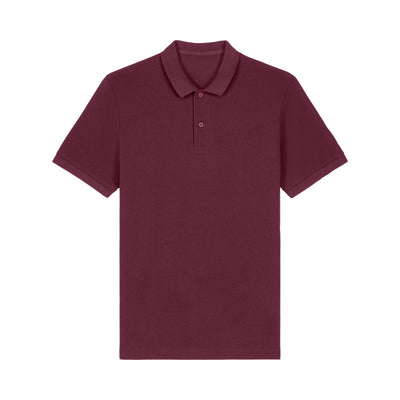
| Polo shirt | Embroidery | Piqué is a textured knit. On its uneven surface embroidery looks clean, whereas a fine print can look slightly restless. |
| Shirt and blouse | Embroidery | A small logo on the chest or cuff looks discreet and copes with washing and ironing. |
| T-shirt | Print, embroidery for small chest logos | Thin jersey carries large printed areas well. A small embroidery works on sturdier shirts. |
| Hoodie and sweatshirt | Both | The thick fabric carries embroidery easily, and the large back is room for a print. |
| Softshell and jackets | Embroidery on the chest, print for large areas | Membranes can lose their water resistance through needle holes. Small logos on the chest are usually not an issue. |
| Cap and beanie | Embroidery | On the curved front, embroidery looks three-dimensional – as 3D embroidery if you like. |
All options for customer-facing teams are on our page embroidered company clothing.
Deciding by use: typical cases
In the end, what counts is what the clothing is for. These typical cases help you decide:
Your team wears the clothing every day in front of customers, and polos and shirts need to last.
Embroidery
Your logo has gradients, a photo or very fine lines that need to be kept.
Print
You need lots of identical shirts with a large design for a trade fair or company run.
Print, often screen printing
The clothing is washed constantly and takes a beating in everyday work.
Embroidery
Each person gets their name discreetly on the chest or sleeve.
Embroidery
Often the best answer
Combine both
The logo embroidered on the chest, large lettering or the website printed on the back. The front looks premium and the back gets noticed.
Embroidery + print
One thing to bear in mind when mixing: thread comes in fixed shades, while print colours can be matched more closely to Pantone or HKS. We choose the thread colour closest to your colour value so that embroidery and print go together.
What about 3D embroidery?
Side noteWith 3D embroidery, a layer of foam sits under the stitches and lifts the design noticeably. The logo looks sculpted and stands out. It suits bold, simple shapes and letters, especially on caps. It is not meant for fine detail. We do 3D embroidery in our own workshop in Munich too.
How to reach the right decision
Choose the clothing
You pick the items your team will wear – polos, shirts, T-shirts or jackets.
Send your logo
You upload your logo and tell us where it should sit and what the clothing is for.
Free advice
We tell you where embroidery and where print fits better, and whether your logo needs a simplified embroidery version.
Print approval
You receive a digital preview with position, size and colours and approve it before production.
Production in Munich
We embroider and print in our own workshop. Delivery takes approx. 7–10 working days.
Embroidery or print: frequently asked questions
Does embroidery last longer than print?
Embroidery is considered particularly hard-wearing because the thread is stitched firmly into the fabric. A print also lasts a long time with proper care. What matters more than the method is that it suits the garment.
Can you embroider a T-shirt?
Yes, a small logo on the chest works well, especially on sturdier shirts. For large designs on thin jersey we recommend a print.
Will my logo look the same embroidered as printed?
Almost. In embroidery, gradients disappear, very fine lines become bolder and the colours come from the thread. The digital preview shows you how your logo will look before production.
Can I mix embroidery and print in one order?
Yes. You can have polos and jackets embroidered and event shirts printed – or combine both on one garment.
Do I need a special file for embroidery?
No. We create the embroidery file from your logo, and it is included. A vector file is ideal; we are happy to check a good pixel file.
Not sure what suits your logo? Send us your enquiry – we will tell you where embroidery and where print is the better choice.

Team Shirtplus
Printing and embroidery in our own workshop in Munich. Created with AI support. Last updated: 11 Oct 2026.
Read next
All posts →
Printing and embroidering B&C: models and methods
Which B&C models suit print and which suit embroidery – with material and fabric weight from our product data, tips on methods and care, and the background to the PETA...19 Oct 2026
Logo positions: where your logo sits best on clothing
Where does your logo sit best? The main positions on shirts, polos, hoodies and jackets, common placement mistakes and how we align every position by laser.15 Oct 2026Tee Jays and Nimbus: two brands for embroidered company clothing
Polos, shirts, knitwear and jackets: what Tee Jays and Nimbus offer in our shop, what the models are suited to and what matters when embroidering their fabrics.11 Oct 2026Questions about your project?
We advise you on the layout free of charge and tell you which method suits your logo.